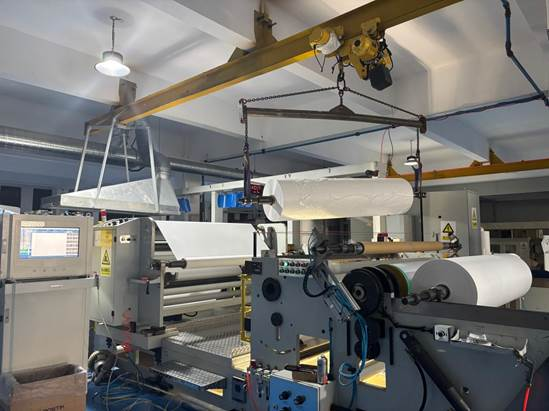
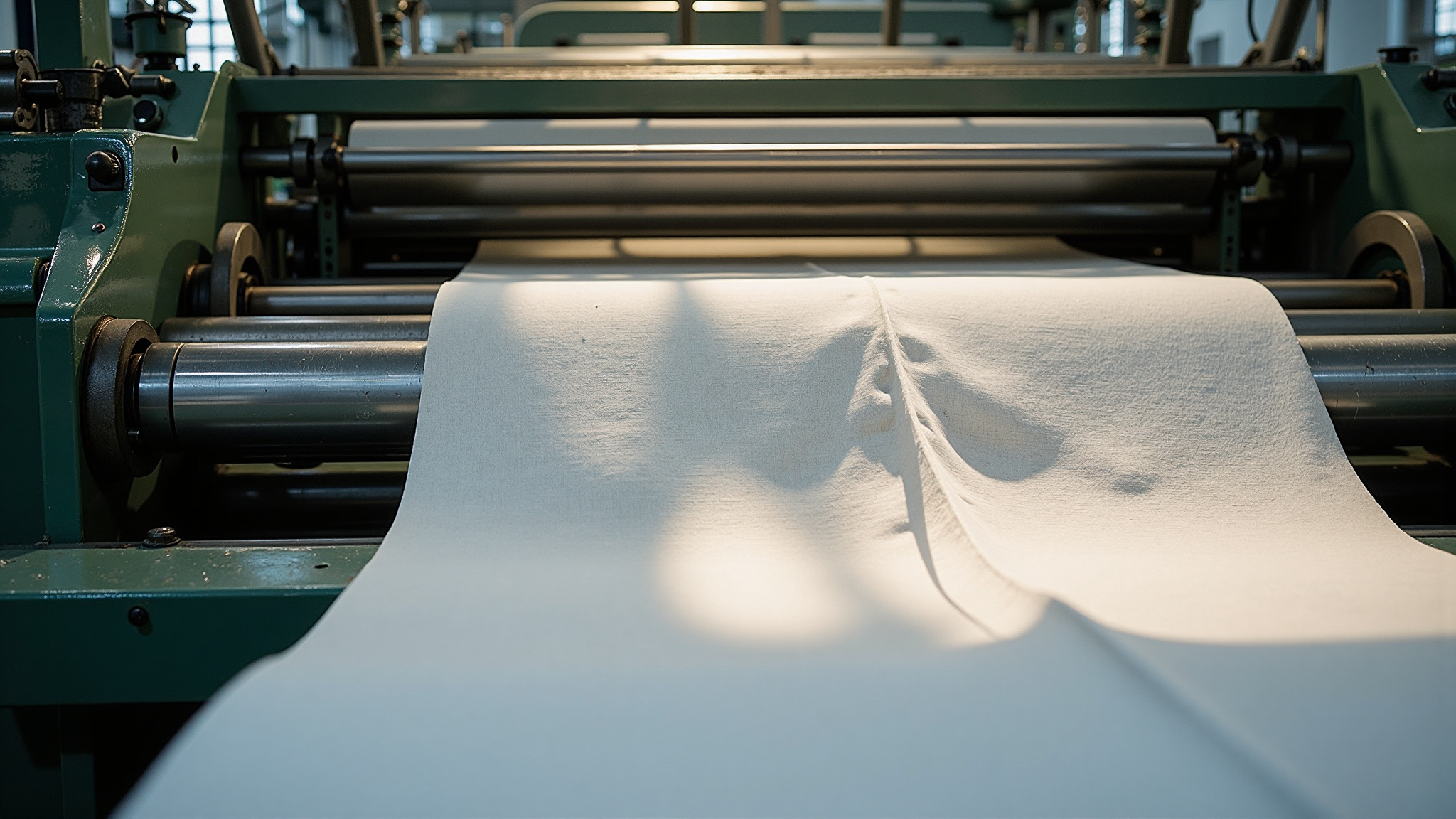
Breathable Film Laminated Nonwoven Fabric: Structure, Performance and Applications
A technical overview of nonwoven-and-film composites, including how breathable films work, which performance indicators matter, and how to specify materials for packaging and functional products.
1. What Is Breathable Film Laminated Nonwoven Fabric?
Breathable film laminated nonwoven fabric is a composite material made by combining a nonwoven substrate with a functional polymer film. The nonwoven layer can contribute handling strength, surface texture and fabric-like feel, while the film layer is selected to provide a defined moisture-transfer or liquid-barrier function.
One common construction uses a polypropylene (PP) spunbond nonwoven laminated to a polyethylene (PE) film. However, not every PE film is breathable, and not every breathable composite has the same air- or vapor-transfer behavior. The film formulation, microstructure, thickness and lamination process all influence the final performance.
2. What Does “Breathable” Mean?
In material specifications, breathability may refer to different phenomena. Moisture vapor transmission rate (MVTR) measures water vapor passing through a material under defined conditions. Air permeability measures the flow of air through a material under a specified pressure difference. These are not interchangeable.
Microporous breathable films commonly use a pore structure that allows water vapor to pass while resisting liquid water penetration under specified test conditions. Other film technologies may use different transport mechanisms. Therefore, a buyer should identify whether the application requires moisture-vapor transmission, airflow, liquid-water resistance, oxygen transmission or a combination of these properties.
|
Important: avoid specifying a material simply as “high breathable.” Define the required test, units, conditions and acceptance range. |
3. Typical Composite Structures
|
Construction |
Illustrative layer arrangement |
Potential design purpose |
|
Two-layer laminate |
Nonwoven + functional film |
Fabric-like surface combined with film functionality |
|
Three-layer laminate |
Nonwoven + functional film + nonwoven |
Film protected or supported by nonwoven layers on both sides |
|
Customized composite |
Nonwoven + film / coating + additional substrate |
Tailored surface, barrier, strength or processing requirements |
Lamination can be achieved through different bonding routes, such as adhesive lamination, thermal bonding or extrusion-based processes. Each route has its own process window and can affect softness, bond strength, appearance and vapor transmission. Excessive adhesive coverage or unsuitable process conditions may alter the functional performance of a breathable layer.
4. Performance Properties to Evaluate
|
Test / property |
What it evaluates |
Application relevance |
|
MVTR |
Water vapor transmission under a defined method |
Moisture exchange through the composite |
|
Air permeability |
Airflow under a specified pressure difference |
Applications requiring measurable air exchange |
|
Hydrostatic resistance |
Resistance to liquid water penetration |
Barrier performance where liquid water is a concern |
|
Tensile strength |
Resistance to tensile loading |
Web handling, converting and service durability |
|
Peel / bond strength |
Adhesion between layers |
Delamination resistance during processing and use |
|
GSM and thickness |
Mass per area and material thickness |
Weight, bulk, handling and product design |
|
Heat-sealing behavior |
Seal formation under defined temperature, pressure and dwell time |
Sachet and package converting |
The finished laminate should be tested as a composite, not only by relying on the film supplier's standalone film data. The nonwoven substrate and bonding layer can influence the measured result.
5. Application: Desiccant Packaging

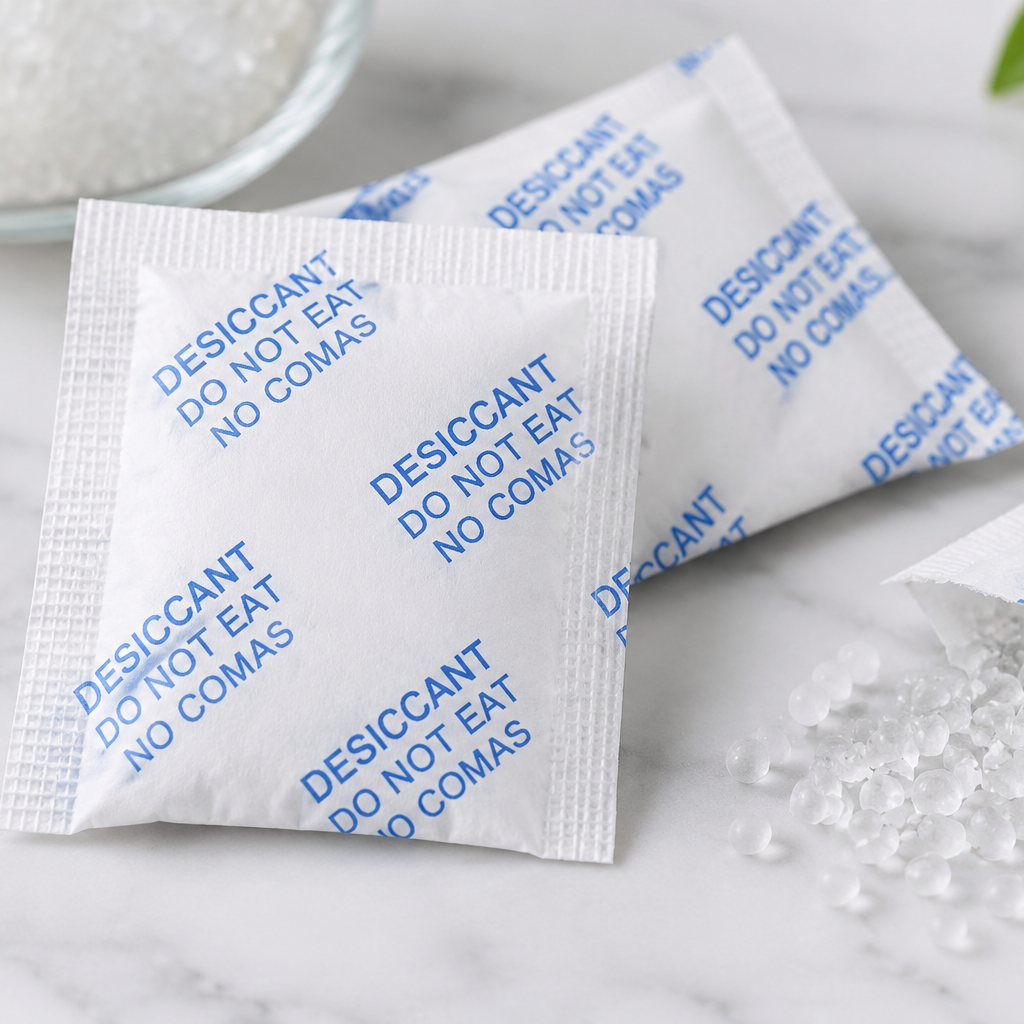
Desiccant sachets need a packaging substrate that allows the required moisture exchange while keeping the desiccant particles contained. Depending on the product design, a breathable film laminate or a porous nonwoven substrate may be considered.
Moisture transfer: confirm that the package allows the required moisture uptake under the expected conditions.
Particle retention: check that the substrate and seams retain the selected desiccant particle size and do not release excessive dust.
Seal integrity: validate heat-sealing or other closure methods using the actual sachet equipment.
Mechanical performance: assess tear resistance, puncture resistance and handling during filling, transport and use.
The best substrate depends on desiccant chemistry, particle size, sachet dimensions, target uptake rate and packaging-line settings. A material that works for one desiccant formulation may not be suitable for another.
6. Application: Disposable Heating Products

Some disposable air-activated heating products rely on oxygen entering the pack to support an exothermic reaction. In these designs, the package material can influence oxygen transfer, moisture behavior and heat output. The required structure is product-specific; moisture-vapor transmission alone does not establish suitability for an oxygen-dependent heating application.
Material evaluation should therefore consider oxygen transmission or air permeability as appropriate, moisture management, seal design, mechanical integrity and the heating product's validated safety requirements.
7. Application: Home Textile and Functional Composites
Film/nonwoven composites may also be developed for selected home-textile, furniture or industrial uses where a combination of surface feel, barrier function and mechanical support is required. For example, a composite used as a backing or protective layer may have different priorities from a sachet substrate.
The specification should identify the required face side, appearance, hand feel, bonding durability, width, roll format and any downstream coating, printing or sewing process.
8. Common Questions
Is every PE film breathable?
No. Breathability depends on the film formulation and structure. A conventional solid PE film should not be assumed to have the same vapor-transfer properties as a microporous or otherwise engineered breathable film.
Does breathable mean air-permeable?
Not necessarily. A material can transmit water vapor while having limited air permeability. Always specify the property that matters to the application.
Can a nonwoven/film laminate be heat sealed?
It depends on the film polymer, layer arrangement, sealant surface and equipment settings. Heat-seal trials should be performed using the intended package design and production conditions.
Which is more important: MVTR or air permeability?
Neither is universally more important. The correct metric depends on the product's working principle and end-use requirements.
Conclusion
Breathable film laminated nonwoven is not a single standardized material. It is a family of composites that can be engineered by selecting the substrate, film, bonding method and layer construction. Successful material selection starts with the end-use function and a measurable specification—not with a product name alone.
|
Looking for a film/nonwoven composite for a specific application? Share your target construction, roll specifications, converting process and required test methods so that suitable material options can be evaluated. |